Baglamukhi Anushthan in Nalkheda बगलामुखी अनुष्ठान
A structured devotional practice for Maa Baglamukhi, held over several days: one Sankalp, daily mantra jaap with Aarti and an unbroken Akhand Deep, and a concluding havan — performed by Pandit Gajendra Vyas Ji at Nalkheda.
- 3 Days
- 5 Days
- 7 Days
- 11 Days
- Nalkheda, Madhya Pradesh
- Structured Anushthan
- Sankalp Guidance
- Direct Pandit Ji Contact
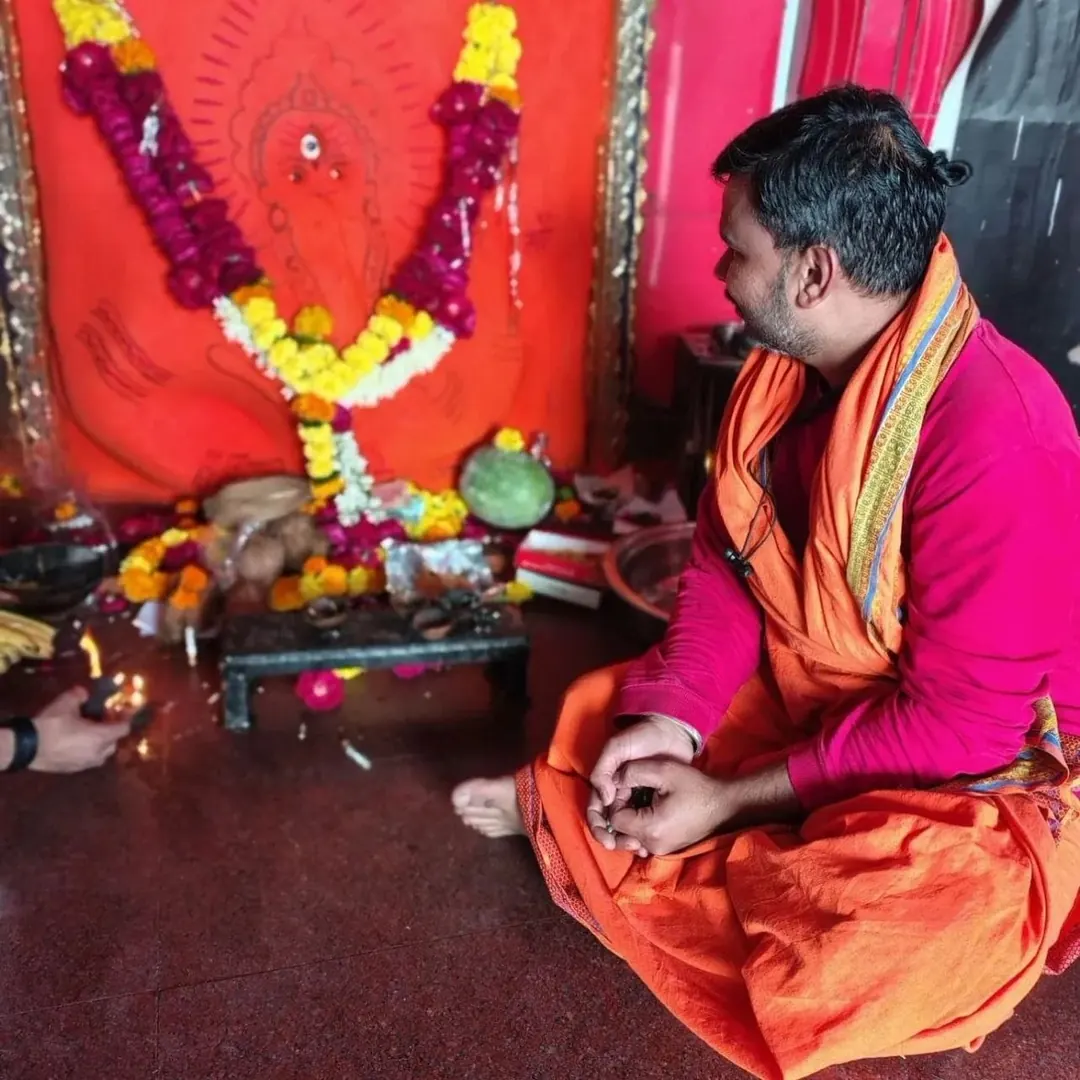
What Is Baglamukhi Anushthan?
In Hindu practice, an anushthan is a vowed course of worship carried out over a fixed number of days. Baglamukhi Anushthan is such a course dedicated to Maa Baglamukhi. Where a puja or a havan is complete in a single session, an anushthan is a sadhana: the same practice repeated every day until a planned total is reached.
Why it is spread over days
The heart of the Anushthan is mantra jaap — repetition of Maa's mantra many thousands of times. Within the tradition this is divided across the days of the Anushthan, so that the practice is sustained and regular rather than done all at once. A longer Anushthan allows a larger total.
One Sankalp, held throughout
The Sankalp is taken once, on the first day, and governs everything that follows: whose Anushthan it is, for what intention, for how many days and with what jaap count. Every day's jaap is offered under that same Sankalp.
The daily practice
Each day Pandit Ji performs the jaap, with Aarti in the morning and evening. An Akhand Deep — an unbroken lamp — burns from the first day to the last.
Completion
When the jaap is complete, the Anushthan concludes with a Dashansh Havan, Tarpan, Marjan and Brahmin Bhojan. These closing rites are traditionally what make an anushthan complete.
Baglamukhi Puja vs Havan vs Anushthan
All three are traditional ways of worshipping Maa Baglamukhi, and none is “better” than another. They differ in length and form, which helps you choose the one that fits your Sankalp.
| Aspect | Puja | Havan | Anushthan |
|---|---|---|---|
| Sessions | A single session | A single session | 3, 5, 7 or 11 days |
| Ritual format | A single session of worship with offerings and Aarti | A single fire ritual at the havan kund | A continuous sadhana spread over consecutive days |
| Mantra / jaap | Mantras accompany each stage of worship | Mool mantra chanted with each ahuti | Mantra jaap is the core, done every day towards a total count |
| Fire ritual | None | Central to the ritual | Dashansh Havan at the conclusion |
| Sankalp | Taken at the start of the puja | Taken at the start of the havan | Taken once at the start, held through every day |
| Daily practice | — | — | Akhand Deep, jaap, and morning and evening Aarti |
| Completion | Aarti | Purnahuti | Dashansh Havan, Tarpan, Marjan and Brahmin Bhojan |
In practice: a puja or havan suits a single visit or occasion, while an Anushthan suits a Sankalp you want carried through a dedicated period. If you're unsure, Pandit Ji can advise.
Who May Consider Baglamukhi Anushthan?
- A Sankalp you want to hold over days
- When a single puja feels too brief for what you wish to offer.
- Family Sankalp
- Taken for the whole household, with each member's name included.
- On behalf of a family member
- Arranged by a relative, with the family member's name and gotra in the Sankalp.
- A structured period of worship
- For devotees who value the discipline of daily jaap and an unbroken lamp.
- Devotees visiting Nalkheda
- Who can attend the start, the conclusion, or any day in between.
- Devotees in other cities or abroad
- Through online live Sankalp, with Pandit Ji carrying out each day for them.
Traditional Significance of Baglamukhi Anushthan
Discipline
Within the tradition, an anushthan's value lies in its regularity — the same practice, at the same place, kept up day after day without a break.
Focused worship
Days given to one deity and one mantra are traditionally regarded as a deeper form of upasana than a single ritual.
Inner strength
Devotees may undertake an anushthan to steady themselves and find resolve during a long or uncertain period.
Protection
Maa Baglamukhi is traditionally associated with protection, and devotees may seek her shelter for themselves and their family.
Keeping a Sankalp
Holding one intention across several days is, within the practice, itself an act of devotion.
Devotees may undertake an Anushthan during difficult circumstances, including legal, family or work matters. These are matters of faith: an Anushthan does not guarantee any legal, financial, marital, health or other outcome, and it is not a substitute for professional advice.
What Is Included in Baglamukhi Anushthan Seva?
Sankalp in your name
Taken at the start with your name, gotra, place and intention.
Akhand Deep
An unbroken lamp kept alight by Pandit Ji for the whole Anushthan.
Daily mantra jaap
Jaap of Maa Baglamukhi's mantra every day, towards the total fixed at Sankalp.
Morning and evening Aarti
Aarti twice a day on every day of the Anushthan.
Dashansh Havan
The concluding havan at the end of the jaap.
Tarpan and Marjan
Traditional water offerings that follow the havan.
Brahmin Bhojan
Feeding of Brahmins as part of the conclusion.
Start date and muhurat
Pandit Ji checks tithi and nakshatra before fixing the start date.
Pandit Ji's guidance
On choosing the duration, the Sankalp and what to expect each day.
This is the general structure of the Anushthan. Details can differ with the duration and Sankalp you choose, so please confirm exactly what your Anushthan will include with Pandit Ji.
How Long Does Baglamukhi Anushthan Take?
Baglamukhi Anushthan is offered over four durations. The structure is the same in each — what changes is the number of days of jaap, and with it the total count fixed in the Sankalp.
3
3-Day Anushthan
5
5-Day Anushthan
7
7-Day Anushthan
11
11-Day Anushthan
- Each day
- Mantra jaap, morning and evening Aarti, and the Akhand Deep kept alight.
- Havan
- Dashansh Havan once, at the conclusion — not every day.
- Completion
- Dashansh Havan, Tarpan, Marjan and Brahmin Bhojan on the final day.
- Sankalp
- The same Sankalp throughout; only the days and jaap total differ by duration.
The right duration depends on your Sankalp and the jaap count. Pandit Ji will help you choose and confirm anything specific to the duration you select.
What Happens During the Anushthan?
- 01
Day 1
Sankalp and lighting of the Akhand Deep
The Anushthan opens with your Sankalp, and the Akhand Deep is lit to burn without a break until the end.
- 02
Every morning
Morning Aarti
Each day begins with Aarti of Maa Baglamukhi.
- 03
Through the day
Mantra jaap
Pandit Ji carries out the day's jaap. The daily share depends on the total count and the number of days.
- 04
Every evening
Evening Aarti
The day closes with Aarti, while the Akhand Deep continues through the night.
- 05
Final day
Dashansh Havan and Purnahuti
Once the jaap is complete, the Dashansh Havan is performed and traditionally concludes with Purnahuti.
- 06
Final day
Tarpan, Marjan and Brahmin Bhojan
The Anushthan is completed with Tarpan, Marjan and Brahmin Bhojan.
Mantra Jaap During Baglamukhi Anushthan
Jaap is the centre of the Anushthan. The mantra of Maa Baglamukhi is repeated with a mala, and each day's repetitions add to one total that is fixed with the Sankalp. Within the tradition, it is this steady, counted repetition over days that distinguishes an anushthan from a single ritual.
Count: the total for a Baglamukhi Anushthan ranges from 36,000 to 1,25,000. The exact count, and how it is divided across the days, is set by Pandit Ji according to your Sankalp and the duration you choose.
Who chants: Pandit Ji performs the jaap on your behalf. If you would like to sit for part of it or recite on your own as well, ask him how best to do so.
Jaap without the full Anushthan: Mantra Jaap Seva offers jaap alone in a fixed count, without the Akhand Deep, daily Aarti or concluding havan. You can read Maa's mool mantra and its meaning on the Maa Baglamukhi page.
Akhand Deep During Baglamukhi Anushthan
Akhand means unbroken. The Akhand Deep is a lamp lit when the Anushthan begins and kept burning day and night until it is complete. Traditionally it stands as a witness to the Sankalp and a sign that the sadhana continues without interruption.
Pandit Ji lights and tends the Akhand Deep himself for the full duration of your Anushthan.
Havan and Purnahuti in Baglamukhi Anushthan
The havan comes once, at the end. It is called Dashansh Havan — dashansh means one-tenth — because traditionally it relates to a tenth of the completed jaap. Ahutis are offered into the fire with the mantra, and the havan traditionally ends with Purnahuti, the final offering.
Tarpan (offering of water) and Marjan (ritual sprinkling of water) follow, and the Anushthan closes with Brahmin Bhojan. If you wish to attend the final day, tell Pandit Ji in advance so he can let you know how you can take part.
What Is Required for Anushthan Sankalp?
- Full name
- Of each person the Anushthan is for.
- Gotra, if known
- If you don't know it, tell Pandit Ji — it won't stop the booking.
- Family information
- Names to include in a family Sankalp, and who will attend in person.
- City
- Your place of residence, stated in the Sankalp.
- Preferred start date
- Pandit Ji fixes the actual start after checking tithi and nakshatra.
- Purpose
- Your intention, in your own words — this also helps Pandit Ji suggest a duration.
Because an Anushthan runs over several days, the Sankalp is fixed before it begins. Requirements can vary; Pandit Ji will ask if anything else is needed.
How to Prepare for Baglamukhi Anushthan
- Attendance
- Not required. You can come for the first day, the final day or any day in between, or not at all.
- On your behalf
- With online live Sankalp, Pandit Ji carries out every day for you and you can join live.
- Before it begins
- Send your Sankalp details and agree the duration, start date and jaap count with Pandit Ji.
- Muhurat
- The start date is confirmed only after tithi and nakshatra are checked — plan travel after that.
- Clothing when attending
- Yellow or white traditional clothes are recommended at the temple — dhoti-kurta for men; a yellow saree, salwar kameez or traditional attire for women.
- Personal observances
- No fasting or dietary rule is listed for this service. If you wish to keep any observance during the Anushthan days, ask Pandit Ji what suits your Sankalp.
Baglamukhi Anushthan in Nalkheda
The Anushthan is performed by Pandit Gajendra Vyas Ji at Maa Baglamukhi Temple, Nalkheda, in Agar Malwa district, Madhya Pradesh (Maa Baglamukhi Temple, Nalkheda - Ujjain Devalaya Marg, Madhya Pradesh, India). It continues at the temple for its full duration, whether or not you are there.
Devotees who can travel often come for the first day's Sankalp or the concluding havan. Others follow through online live Sankalp from their own city. Nearest railway station: Ujjain Junction (approx. 98 km) / Kota Junction (approx. 191 km); nearest airport: Devi Ahilya Bai Holkar Airport, Indore (IDR).
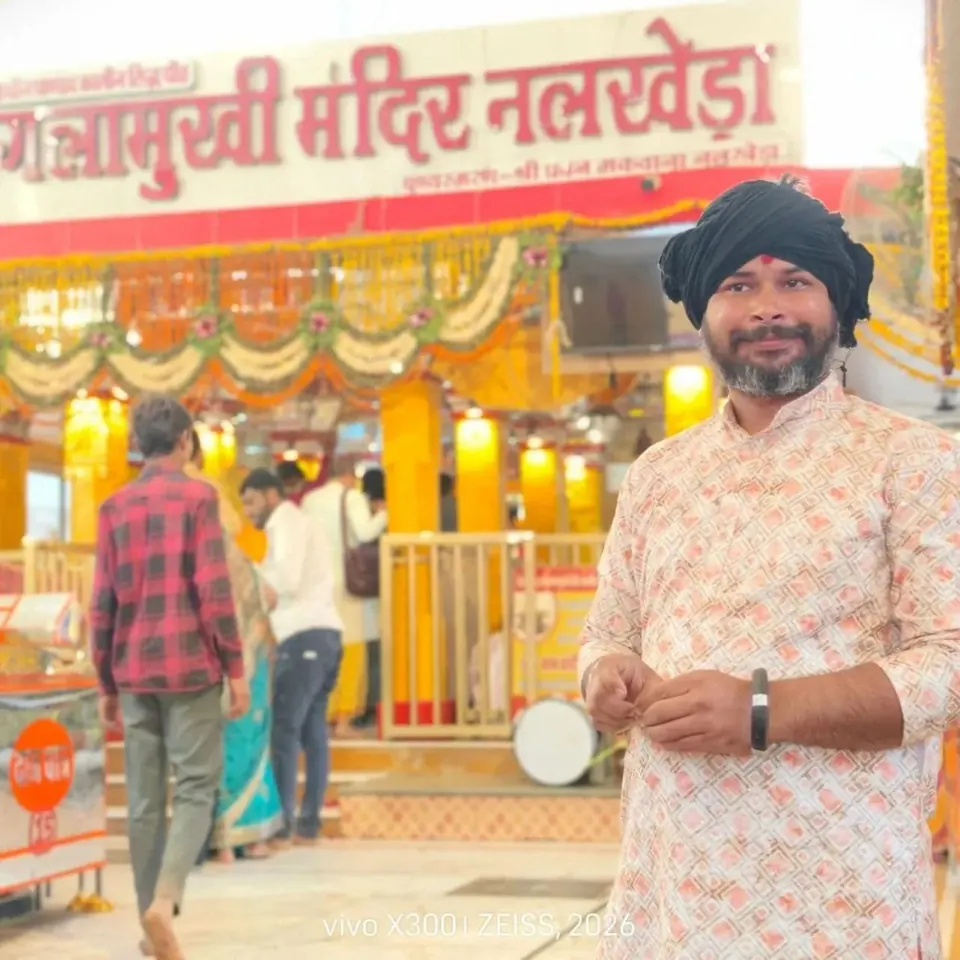
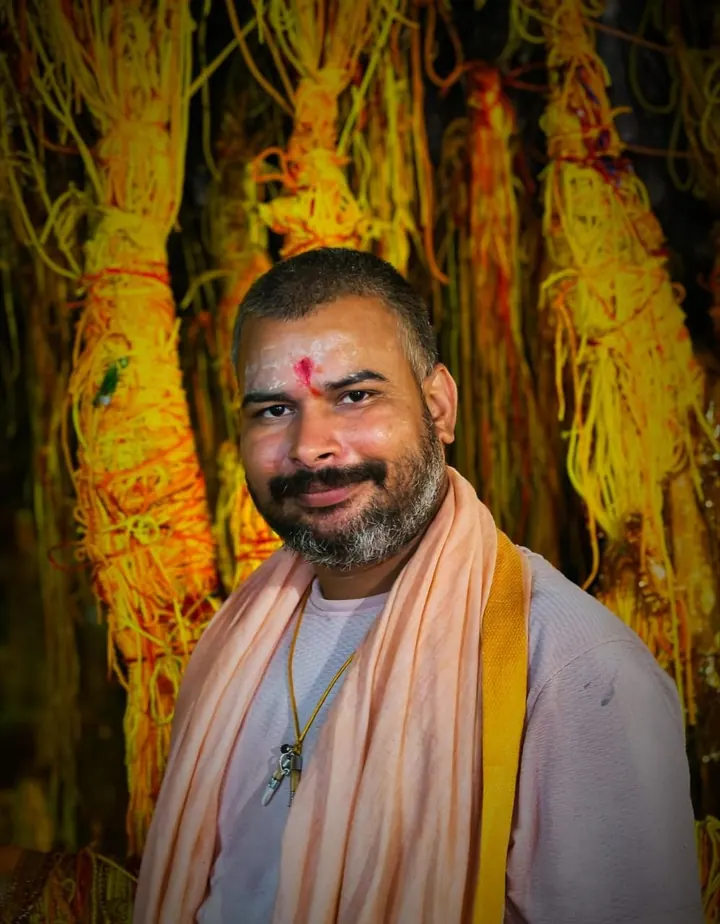
Meet Pandit Gajendra Vyas Ji
Pandit Gajendra Vyas Ji performs multi-day anushthan and mantra jaap, as well as puja and havan, at Maa Baglamukhi Temple, Nalkheda. Sadhana has shaped his own path: after studying karmakand in Vrindavan and receiving diksha in Ujjain, he pursued Dash Mahavidya sadhana at Kamakhya, Assam. He is originally from Shajapur, Madhya Pradesh.
For an Anushthan he discusses the Sankalp with you himself, helps choose the duration and jaap count, and remains reachable throughout the days it runs.
About Pandit Ji →How to Book Baglamukhi Anushthan
Choose the duration
3, 5, 7 or 11 days — or ask Pandit Ji which suits your Sankalp.
Contact Pandit Ji
Through the booking form, WhatsApp or a call; you speak with him directly.
Share Sankalp details
Name, gotra, city, family members, purpose and preferred start date.
Confirm the start date
Pandit Ji confirms the muhurat, jaap count, procedure and dakshina before booking is final.
Anushthan begins
With Sankalp and the Akhand Deep at Maa Baglamukhi Temple, Nalkheda.
Receive completion information
Attend the final day in person, or follow along through online live Sankalp on WhatsApp or a call.
Baglamukhi Anushthan FAQ
What is Baglamukhi Anushthan?
A multi-day sadhana dedicated to Maa Baglamukhi, lasting 3, 5, 7 or 11 days. After the Sankalp, Pandit Ji keeps an Akhand Deep burning, performs mantra jaap every day with morning and evening Aarti, and completes it with Dashansh Havan, Tarpan, Marjan and Brahmin Bhojan.
How is Anushthan different from Baglamukhi Puja?
Baglamukhi Puja is a single session of worship. An Anushthan continues over several days, centres on mantra jaap towards a set total, and ends with a havan.
How is Anushthan different from Baglamukhi Havan?
Baglamukhi Havan is a single fire ritual. In an Anushthan, the havan (Dashansh Havan) comes at the end, after days of jaap, Aarti and the Akhand Deep.
How many days does Baglamukhi Anushthan take?
It is offered over 3, 5, 7 or 11 days. The duration is chosen with the Sankalp and the total jaap count, and Pandit Ji can help you decide.
What information is required for the Sankalp?
Full name, gotra if known, city, family members to include, your preferred start date and the purpose of the Anushthan. Pandit Ji will tell you if anything else is needed.
Is havan included in Baglamukhi Anushthan?
Yes. A Dashansh Havan is performed at the conclusion, after the jaap is complete. It is not performed daily.
Is Akhand Deep included?
Yes. Pandit Ji lights the Akhand Deep at the start and keeps it burning without a break until the Anushthan is complete.
Do I need to visit Nalkheda personally?
No. You may attend any part of it — many devotees come for the start or the final day — but your presence is not required.
Can the Anushthan be performed on my behalf?
Yes. Through online live Sankalp, Pandit Ji performs the Anushthan with your Sankalp, and you can join live on WhatsApp or a call.
How can I book Baglamukhi Anushthan?
Use the booking form or message Pandit Ji on WhatsApp (+91 9977537397) with your Sankalp details and preferred start date. He confirms the duration, muhurat and dakshina with you before the booking is final.
Related Services
- Maa Baglamukhi Puja →A single session of worship.
- Baglamukhi Havan →A single fire ritual.
- Mantra Jaap Seva →Jaap alone, in a fixed count, on your behalf.
- Baglamukhi Mantra →Maa's mool mantra and its meaning.
- Baglamukhi Puja Vidhi →The procedure of the puja, step by step.
- Maa Baglamukhi Temple Nalkheda →Darshan and Aarti timings, and attire.
- Mangal Dosh & Ark Vivah Puja →Mangal Bhaat Puja and Ark Vivah.
- Shani, Rahu & Ketu Jaap →Graha jaap with Dashansh Havan.
॥ श्रद्धा • संकल्प • मार्गदर्शन ॥
Book Baglamukhi Anushthan in Nalkheda
Talk to Pandit Ji about the duration, a start date, your Sankalp, the procedure, how to prepare and his availability. He can be reached every day, 7:00 AM – 9:30 PM.