Baglamukhi Havan in Nalkheda बगलामुखी हवन
A traditional Vedic fire ritual for Maa Baglamukhi, in which ahutis are offered into the sacred fire with her mool mantra and your Sankalp — performed by Pandit Gajendra Vyas Ji at Nalkheda.
- Nalkheda, Madhya Pradesh
- Traditional Havan Vidhi
- Sankalp Guidance
- Direct Pandit Ji Contact
What Is Baglamukhi Havan?
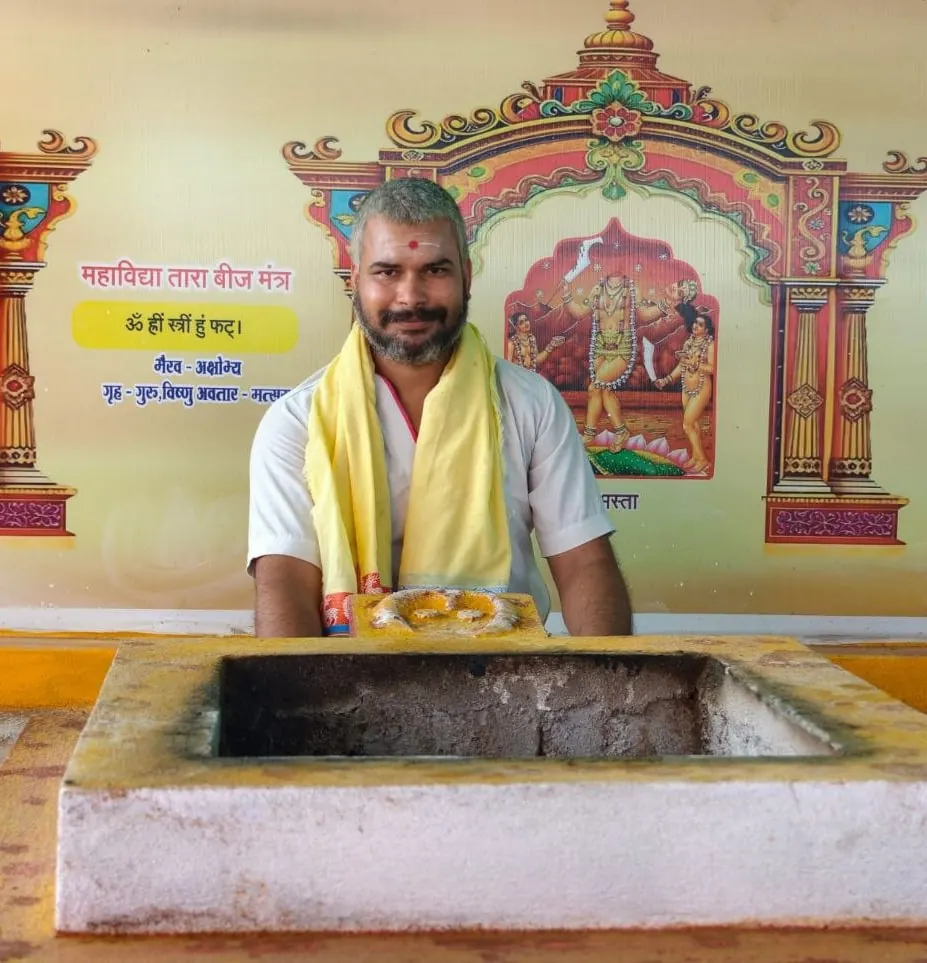
A havan is a Vedic fire ritual. A sacred fire is kindled in a havan kund and Agni Dev — traditionally regarded as the messenger who carries offerings to the deities — is invoked. Offerings called ahutis are then placed into the fire while mantras are chanted.
In Baglamukhi Havan, the fire ritual is dedicated to Maa Baglamukhi, worshipped as Pitambari, the goddess in yellow. The ahutis are chosen accordingly — yellow mustard, turmeric, guggul, camphor, kamal gatta and cow ghee — and each is offered as Pandit Ji chants her mool mantra.
Like every formal ritual, it begins with a Sankalp naming who the havan is for and why, and it traditionally ends with Purnahuti, the final offering that completes the havan. Within the practice, the fire is seen as a witness to the devotee's Sankalp, which is why some devotees prefer a havan over Maa Baglamukhi Puja alone.
Why Do Devotees Perform Maa Baglamukhi Havan?
Protection
Within the practice, offering into the sacred fire is a way of seeking Maa Pitambari's protection for oneself and one's household.
Strength to face what lies ahead
Devotees may seek courage and a steady mind before or during a demanding time — the havan as a moment of resolve, not a promise of results.
A focused personal Sankalp
Many devotees choose a havan when they want their Sankalp offered with the fire as witness — Agni is traditionally regarded as the carrier of offerings to the divine.
Worship as a family
A havan is often a family occasion, with the Sankalp taken for the household and family members sitting together before the kund.
Devotion to Maa Baglamukhi
For many, it is simply a fuller form of worship to offer at Nalkheda, alongside darshan.
These are traditional beliefs and devotional intentions. A havan does not guarantee any legal, financial, marital, medical or other outcome, and it is not a substitute for professional advice.
Who May Consider Baglamukhi Havan?
- Your own Sankalp
- When you want to offer a personal intention through a fire ritual rather than puja alone.
- A family Sankalp
- For the household as a whole, with family members attending together if they wish.
- On behalf of someone
- Arranged by a son, daughter or relative for a family member, with their name and gotra in the Sankalp.
- Devotees visiting Nalkheda
- Who want to add a havan to their darshan at Maa Baglamukhi Temple.
- Devotees far from Nalkheda
- Through online live Sankalp, with the havan performed on their behalf.
What Is Included in Baglamukhi Havan Seva?
Sankalp in your name
With your name, gotra (if known), place and intention — or for family members.
Havan kund and Agni invocation
The kund is prepared and Agni Dev is invoked by Pandit Ji.
Havan samagri
Arranged by Pandit Ji at the temple — you don't need to bring it.
Mool mantra recitation
Maa Pitambari's mool mantra is chanted with the offerings.
Ahutis into the sacred fire
Offerings of yellow mustard, turmeric, guggul, camphor, kamal gatta and cow ghee.
Date and muhurat check
Tithi and nakshatra are checked before your date is confirmed.
Pandit Ji's guidance
Speak with Pandit Ji directly before booking and throughout the havan.
Online live Sankalp
If you can't travel, join live on WhatsApp or a call while the havan is performed for you.
Baglamukhi Havan Vidhi (बगलामुखी हवन विधि)
The havan follows this broad sequence. The exact steps can change with the Sankalp and the type of havan, and Pandit Ji will walk you through his procedure beforehand.
- 01
Preparation of the havan kund
The kund is made ready and the samagri set out by Pandit Ji before you sit for the havan.
- 02
Sankalp
Your name, gotra, place and intention are stated, so the havan is offered on behalf of the right person or family.
- 03
Invocation and preliminary worship
Preliminary worship is performed according to Pandit Ji's procedure, and Agni Dev is invoked in the kund.
- 04
Mantra recitation
Maa Pitambari's mool mantra is chanted throughout the havan. The number of recitations depends on the Sankalp and procedure — ask Pandit Ji if you would like to know it for your havan.
- 05
Ahutis into the fire
With the mantra, ahutis of yellow mustard, turmeric, guggul, camphor, kamal gatta and cow ghee are offered into the fire. This is the main part of the havan and takes most of the time.
- 06
Purnahuti
Traditionally, a havan concludes with Purnahuti — a final, complete offering into the fire. Pandit Ji explains how it is done for your Sankalp.
- 07
Concluding prayer
The havan closes with prayer to Maa Baglamukhi. Details of the concluding steps can vary with the type of havan and the Sankalp.
What Happens During the Ahuti?
An ahuti is a single offering placed into the sacred fire. Traditionally, each ahuti is made at the close of a mantra, usually ending with “svaha”, so that the offering and the prayer go into the fire together. In this havan the mantra is Maa Pitambari's mool mantra.
Pandit Ji keeps the fire going with cow ghee and offers the samagri through the main part of the havan. How many ahutis are offered depends on the Sankalp and procedure.
Taking part: if you attend in person, you sit with your family before the kund through the havan. Pandit Ji will tell you on the day whether and when you offer ahutis yourself.
Joining online: with online live Sankalp, Pandit Ji offers the ahutis on your behalf while you join live on WhatsApp or a call.
Baglamukhi Havan Samagri
Pandit Ji arranges the havan samagri at the temple, so there's nothing to buy or carry. These are the main materials offered:
Yellow mustard (peeli sarson)
One of the main ahuti materials; yellow is traditionally associated with Maa Pitambari.
Turmeric (haldi)
Offered into the fire — turmeric is central to Maa Baglamukhi's worship.
Cow ghee
Pure cow ghee, used to sustain the fire and as an offering in itself.
Guggul and camphor
Aromatic resin and camphor offered into the fire.
Kamal gatta
Lotus seeds, offered as part of the ahutis.
Kund and ritual items
The fuel and other items Pandit Ji's procedure requires to prepare and maintain the fire.
The exact samagri may vary depending on the havan procedure and Sankalp. Confirm the final requirements with Pandit Ji.
What Information Is Required for Havan Sankalp?
- Full name — Of each person the havan is being performed for.
- Gotra, if known — Not knowing your gotra does not stop you from booking — just tell Pandit Ji.
- Family details — Names of family members to include, and how many will attend in person.
- City — Your place of residence, which forms part of the Sankalp.
- Preferred date — Checked against tithi and nakshatra before it is confirmed.
- Intention — What you wish to offer the havan for, in your own words.
Requirements may vary with the type of havan; Pandit Ji will let you know if anything else is needed.
How to Prepare for Baglamukhi Havan
- Around the havan kund: keep leather items such as belts and wallets away from the kund area, as the temple guidelines ask.
- Clothing: yellow or white dhoti-kurta or traditional clothes for men; a yellow saree, salwar kameez or traditional attire for women. You will be seated near the fire for some time, so wear something comfortable.
- During the havan: the temple guidelines suggest keeping a quiet mind; many devotees silently repeat “Hleem”. Anything further for your Sankalp, Pandit Ji will tell you.
- Before the day: send your Sankalp details when booking, and wait for Pandit Ji to confirm the date and muhurat before making travel plans.
- Arrival: reach the temple before the time Pandit Ji confirms. The temple's morning puja and havan time is 7:00 – 11:30.
- Family: tell Pandit Ji in advance how many people will attend, so seating at the kund can be arranged.
Baglamukhi Havan in Nalkheda
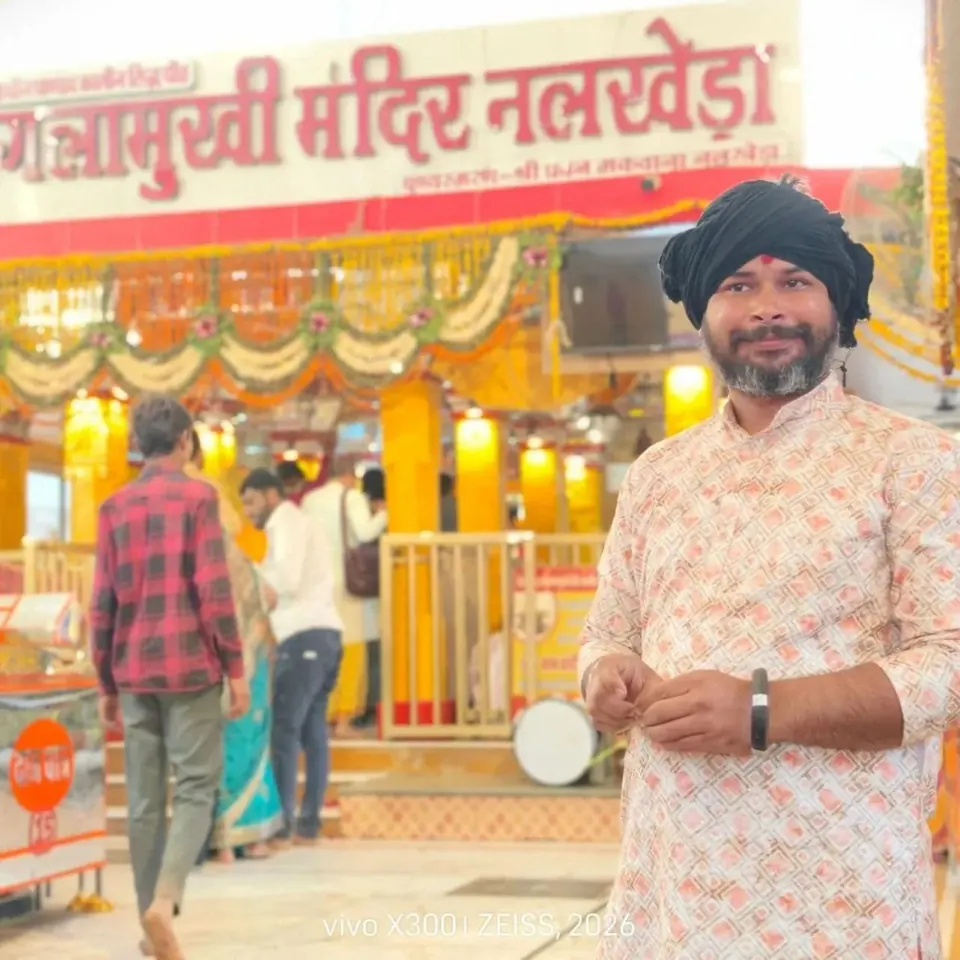
Pandit Gajendra Vyas Ji performs Baglamukhi Havan at Maa Baglamukhi Temple, Nalkheda, in the Agar Malwa district of Madhya Pradesh (Maa Baglamukhi Temple, Nalkheda - Ujjain Devalaya Marg, Madhya Pradesh, India). Devotees who come to Nalkheda for Maa's darshan often arrange the havan during the same visit.
- Do I have to be there?
- No. You and your family are welcome to attend, but it isn't required.
- On your behalf
- With online live Sankalp, the havan is performed for you and you join live.
Meet Pandit Gajendra Vyas Ji
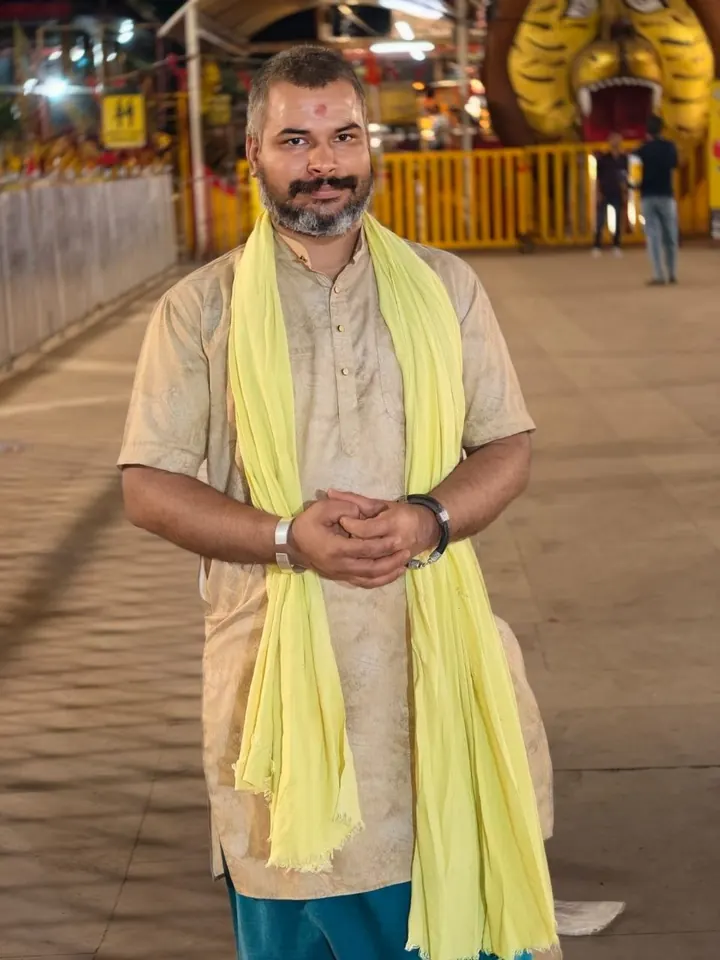
Pandit Gajendra Vyas Ji conducts havan, puja and anushthan for devotees at Maa Baglamukhi Temple, Nalkheda. His background is in karmakand — the practice of Vedic rituals such as havan: he studied in Vrindavan, received formal instruction and diksha in Ujjain, and pursued Dash Mahavidya sadhana at Kamakhya.
He talks with each devotee himself — to understand the Sankalp, suggest whether a havan suits it, and explain the procedure and dakshina before anything is confirmed.
Baglamukhi Puja vs Baglamukhi Havan
Both are traditional forms of worshipping Maa Baglamukhi; neither is “better”. The difference is mainly in form:
| Aspect | Baglamukhi Puja | Baglamukhi Havan |
|---|---|---|
| Ritual format | Worship of Maa with upacharas, offerings and Aarti | Vedic fire ritual centred on the havan kund |
| Fire ritual | None — only the Aarti lamp | Central — Agni Dev is invoked and offerings go into the fire |
| Main components | Sankalp, Gauri-Ganesh Puja, Kalash Sthapana, Navagraha Puja, Shodashopachar Puja, Aarti | Sankalp, Agni invocation, mool mantra, ahutis, Purnahuti |
| Ahuti | No ahutis; Pitambar, Bilva, marigold and Haldi Archana are offered to Maa | Yellow mustard, turmeric, guggul, camphor, kamal gatta and cow ghee |
| Purnahuti | Not part of the puja | Traditionally concludes the havan |
| Preparation | Samagri arranged by Pandit Ji | Samagri and kund prepared by Pandit Ji |
| Typical context | Devotional worship with a Sankalp, often during a darshan visit | When a devotee wants the Sankalp offered through a fire ritual |
Read the full Maa Baglamukhi Puja page, or ask Pandit Ji which suits your Sankalp.
How to Book Baglamukhi Havan
- 01
Choose Baglamukhi Havan
Or ask Pandit Ji whether a havan, puja or anushthan fits your Sankalp.
- 02
Contact Pandit Ji
Through the booking form, WhatsApp or a call — you speak with Pandit Ji himself.
- 03
Share Sankalp details
Name, gotra, city, family members, intention and preferred date.
- 04
Confirm date
Pandit Ji confirms the muhurat, procedure and dakshina before the booking is final.
- 05
Havan is performed
At Maa Baglamukhi Temple, Nalkheda — in person, or for you through online live Sankalp.
- 06
Receive completion information
In person you sit through to the conclusion; online, you follow along live on WhatsApp or a call.
Baglamukhi Havan FAQ
What is Baglamukhi Havan?
It is a Vedic fire ritual dedicated to Maa Baglamukhi. Pandit Ji invokes Agni Dev in a havan kund and offers ahutis of yellow mustard, turmeric, guggul, camphor, kamal gatta and cow ghee while chanting Maa Pitambari's mool mantra, with the Sankalp taken in your name.
Where is Baglamukhi Havan performed in Nalkheda?
At Maa Baglamukhi Temple, Nalkheda, on the Nalkheda–Ujjain Devalaya Marg in Agar Malwa district, Madhya Pradesh, by Pandit Gajendra Vyas Ji.
What samagri is required, and do I need to bring it?
The main ahuti materials are yellow mustard, turmeric, guggul, camphor, kamal gatta and cow ghee. Pandit Ji arranges all the havan samagri at the temple, so you don't need to bring anything. The exact list can vary with the procedure and Sankalp.
Can the havan be performed in my name?
Yes. The Sankalp is taken with your name, gotra (if known) and intention. It can also be taken for family members.
What information is required for the Sankalp?
Full name, gotra if known, city, names of family members to include, your preferred date and your intention. Pandit Ji will ask if anything else is needed.
Do I need to visit Nalkheda personally?
No. You are welcome to attend, but through online live Sankalp the havan is performed on your behalf and you can join live on WhatsApp or a call.
What is the difference between Baglamukhi Puja and Havan?
The puja is worship of Maa with upacharas, offerings and Aarti, without a fire ritual. The havan centres on the sacred fire: ahutis are offered into the kund with the mool mantra and it traditionally concludes with Purnahuti.
How can I book Baglamukhi Havan?
Use the booking form on this page or message Pandit Ji on WhatsApp with your Sankalp details and preferred date. Pandit Ji confirms the muhurat, procedure and dakshina with you before the booking is final.
Can I speak to Pandit Ji before booking?
Yes — call or WhatsApp +91 9977537397, any day between 7:00 AM and 9:30 PM.
Anya Puja Sevayein (Related Services)
- Maa Baglamukhi Puja →Worship of Maa without a fire ritual.
- Baglamukhi Anushthan →A multi-day sadhana that concludes with a havan.
- Mantra Jaap Seva →Jaap of Maa's mantra on your behalf.
- Mangal Dosh & Ark Vivah Puja →Mangal Bhaat Puja and Ark Vivah.
- Shani, Rahu & Ketu Jaap →Graha jaap with Dashansh Havan.
- Maa Baglamukhi Temple Nalkheda →Darshan and Aarti timings, and attire.
- Baglamukhi Mantra →The mool mantra and its meaning.
- Baglamukhi Puja Vidhi →Step-by-step procedure of the puja.
॥ श्रद्धा • संकल्प • मार्गदर्शन ॥
Book Baglamukhi Havan in Nalkheda
Speak with Pandit Ji about available dates, your Sankalp details, the havan procedure and how to prepare. He is available every day, 7:00 AM – 9:30 PM.